Before winter arrives, Maryland homeowners should inspect their deck for loose fasteners, moisture damage, failing ledger boards, worn railings, mildew buildup, drainage issues, and footing movement. Catching these seven problems in the fall prevents costly repairs come spring and keeps your deck safe through freeze-thaw cycles. ARH Decks recommends a professional inspection if you notice any warning signs.
Maryland’s weather doesn’t make it easy on outdoor living spaces. One week you’re grilling on a 70-degree afternoon, and the next you’re scraping frost off the railings. That swing between warm and freezing temperatures puts real stress on your deck’s structure, and if small issues go unnoticed, they tend to get a lot bigger by the time spring rolls around.
Fall is the ideal time for a deck inspection. The leaves are down, the humidity has dropped, and you can actually see what’s happening with your boards, fasteners, and framing before snow and ice complicate everything. At ARH Decks, we’ve walked countless Bel Air and Harford County homeowners through this exact process, and we’ve seen firsthand how a thirty-minute walkaround in October can save thousands of dollars in structural repairs later.
Here are the seven problem areas every Maryland homeowner should check before the temperature drops for good.
1. Loose or Corroded Fasteners
Screws, nails, and brackets expand and contract with Maryland’s temperature swings. Over a few seasons, this constant movement can loosen fasteners or cause them to corrode, especially if your deck was built with standard hardware rather than stainless steel or coated fasteners rated for outdoor use.
Walk your deck and check for screws that sit proud of the board surface, wobbly railings, or any metal connectors showing rust. A loose fastener might seem minor, but it’s often an early sign that water has worked its way into the wood fibers around it.
2. Moisture Damage and Wood Rot
Wood decking, especially around ledger boards, posts, and stair stringers, is vulnerable to moisture intrusion. Soft spots, dark staining, or a spongy feel underfoot are all signs that water has penetrated the wood and rot has begun to set in.
This is particularly important to check where your deck attaches to your home. The ledger board is one of the most structurally critical components of any deck, and moisture trapped behind improperly flashed ledger connections is a leading cause of deck collapses nationwide. If you notice gaps, discoloration, or soft wood near this connection point, it’s worth having a professional take a closer look before winter moisture makes things worse.
3. Composite or PVC Decking Showing Wear
If your deck is built with composite materials like Trex, Fiberon, or TimberTech, or PVC decking from Azek or Wolf Home Products, you’re dealing with far less maintenance than traditional wood. But these materials still benefit from an annual check.
Look for surface scratches that have exposed the core material, any swelling at board ends, or fading that seems uneven across the deck surface. Composite and PVC decking resist rot and insects far better than wood, which is one of the reasons we recommend these materials to so many of our clients, but boards can still be damaged by debris buildup or improper installation.
4. Railing Stability
Railings take a beating. They get leaned on, bumped into, and exposed to the same freeze-thaw cycles as the rest of your deck. Give every section a firm push and shake to test stability. Pay particular attention to posts, since a weakened post connection is both a safety hazard and a sign that moisture may have compromised the framing underneath.
Maryland building code requires railings on decks with a certain height above grade, so if yours feels unstable, it’s not just inconvenient. It’s a liability you’ll want addressed before kids, pets, or guests are relying on it during holiday gatherings.
5. Mold, Mildew, and Algae Buildup
Maryland’s humid summers followed by a wetter fall create ideal conditions for mold and mildew growth, particularly on the underside of boards and in shaded areas that don’t get much sun exposure. Beyond being unsightly, this buildup can make surfaces slippery and, over time, break down the wood fibers or compromise the finish on composite decking.
A simple cleaning with the right deck cleaner designed for your material can go a long way, but widespread mildew is often a sign of a drainage or airflow issue underneath your deck that’s worth investigating further.
6. Poor Drainage Around the Deck
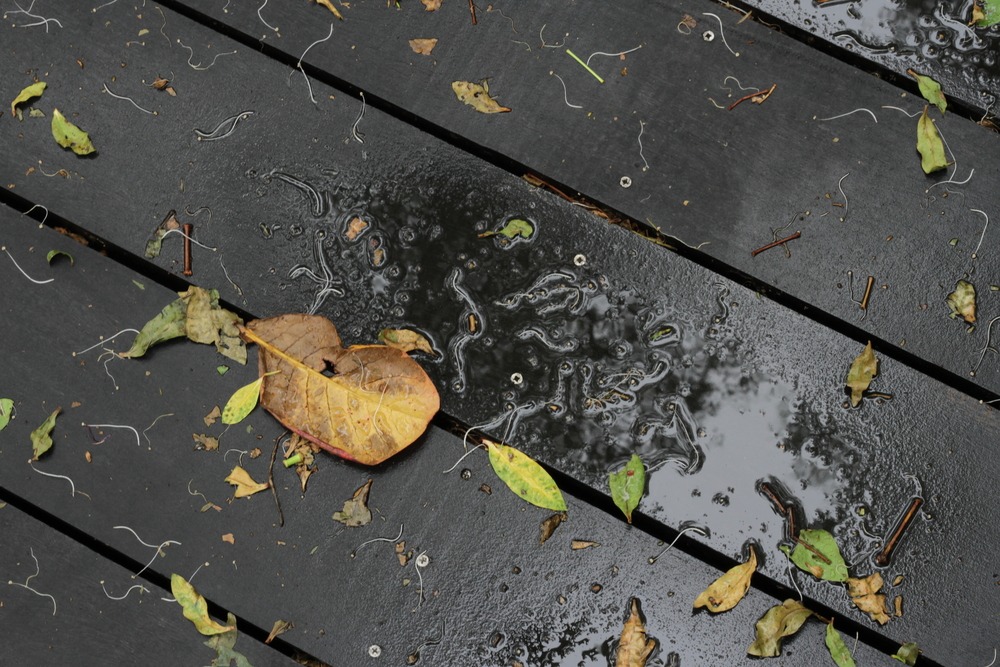
Water needs somewhere to go. If you notice pooling water on your deck surface after rain, or standing water underneath the structure, your deck may have a drainage problem that will only worsen once snow starts melting in late winter.
Check that gaps between boards haven’t filled with debris, that gutters and downspouts near your deck are directing water away from the foundation, and that grading underneath hasn’t shifted to create low spots. Addressing drainage now prevents ice buildup later, which adds weight and stress to your deck’s structure during the coldest months.
7. Footing and Post Movement
Your deck’s footings anchor the entire structure to the ground, and in Maryland’s clay-heavy soil, freeze-thaw cycles can cause footings to shift over time if they weren’t installed deep enough or weren’t poured correctly in the first place. Check for any noticeable tilt in support posts, gaps where posts meet footings, or unevenness across your deck surface that wasn’t there before.
Footing problems are among the most serious issues on this list because they affect the structural integrity of the entire deck, not just one section. If you notice movement, this is one repair that genuinely benefits from a professional assessment rather than a DIY fix.
Protect Your Investment Before the Freeze Sets In
A deck is one of the more significant investments homeowners make in their outdoor living space, and a little attention each fall keeps that investment sound for years to come. Most of the problems above are far easier, and far less expensive, to fix in October than they are after a Maryland winter has had its way with your deck.
If your fall inspection turns up anything concerning, or if you’d simply rather have a trained eye take a look, ARH Decks has been helping Bel Air and Harford County homeowners build and maintain decks, patios, and screened porches that hold up to everything Maryland weather delivers. Whether you need a repair, a seasonal maintenance plan, or you’re starting to think about a deck upgrade using materials like Trex, Azek, or TimberTech for next spring, we’re happy to help you plan ahead.
Request your free estimate today at arhdecks.com/contact-us and let our team make sure your deck is ready for whatever this winter brings.
